Last Friday, around 2AM, I was on my way back to our place in Vito Cruz, Taft, and something you don't see a lot happened.
I just got past the LRT station when a vehicle was driving against the traffic, which ihit a car, and eventually tumbled over, crushing the driver beneath it. He slowly pushed back up his tricycle. Someone then wordlessly ran towards him, and that's when the driver moved quickly, and ran very fast away from the scene, leaving his vehicle behind.
It turns out the one who got there, was a Korean, who was chasing the guy with a huge white cellphone hugged tightly in his chest. A snatcher. The Korean stopped chasing because he looked wounded. He was barefoot and he broke his slippers. I approached him and offered help. He was alone and the onlookers wouldn't even help even though they were asking where the snatcher was. I kept on telling them where he was but they just stared and walked away shortly.
The Korean guy told me he hated it here in the Philippines because of things like that, but he was thankful for people like me. He kept on thanking me.
Anyway, he was wondering whether I could help him call the police. I was just hesitant to leave him there since the snatcher might come back for the tricycle he left behind. I saw the snatcher was still a bit near the place, but probably still wondering how he could get his trike back. I saw a patrol jeep at Vito Cruz that luckily stopped due to the red light. I called their attention and that's when the formalities started.
The road was unlit, and the night's breeze were still fresh
A sight so beautiful, I know I will never forget
I can still remember that time when I was with my cousins
At the back of our truck making all sorts of jokes and stories
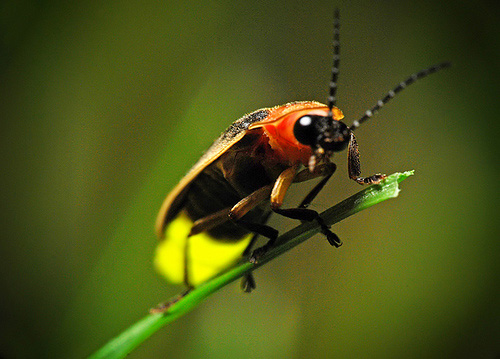
When we saw tiny lights defeating the dark
A thousand fireflies making their home up above
Going years back, in our own little yard
I am a lot younger and a lot excited about the world
How small things around me could mean a lot bigger
Like that moment when a butterfly settles on a flower
And what do I find common in the life of these bugs?
Is how beautiful they are, and delicate at the same time
Trap them in a jar and enjoy their beauty
Or should I decide to let them live their lives and let them go free?
Going back to those years, I remember so clearly
I just watched afar, enjoying the scenery
I may have once or twice tried to trap them in a bottle of some sort
But that I will never do anymore, 'til the day I grow old
Now when I am grown, and these sound like kid's talk
I've still seen my own share of fireflies and butterflies in my everyday's walk
The same question I struggle to answer, should I stop them from going?
But I know what the right thing is, that is to let them keep on growing
Background:
It was last 2008 when I first wanted to write about a friend I met, and how our meeting was as short as a life of a butterfly. To tell you more, this was inspired by someone who was a grandson of one of the greatest presidents (in my opinion) of the Philippines, who lived a life in exile. We were classmates for a single term, and that friend of mine had to go back outside the country to continue his studies. I had a choice, whether to keep that butterfly in a jar and let it die, or set it free and let it live its life to the fullest. The same goes in real life, there are wonderful people that we can meet. Should we keep them from going their way and stop their journey and be selfish?
5 years later, this 2013, I met someone much like the first (note to self to refer to the date this was posted). And the meeting was as awesome when I first saw fireflies. And the same question rings in my head-whether to keep it in my jar and let it die quickly, or let it go with the others of its kind and allow me to watch them from afar.
I am not a biologist, but I know that the life of these bugs are very short, as they are fragile. In contrast to them, I have a full life ahead of me, and I must focus on that.
This writing is about letting go. Is this an easy thing to do? I bet it is not. It is needless to say that it is the right thing. Writing this now (and finally, after 5 years!) helped me settle on what is the right thing to do. I myself know how hard it is to do this, but I feel better now. Who knows, I can be in my own shell at the moment, waiting to grow out of it, right? Letting to of others can also mean letting myself move forward.
Symbolisms used:
1. Butterfly - Colourful, flight, short life, maturity
2. Firefly - light, nighttime, cigarettes, short life, innocence
*In reference to their equivalent qualities in real human life
PS
This music/video reflects this post a bit. Not sure if you will enjoy it, but I definitely like the song.
People arguing that either God isn't real, or that He is evil because of death, illness, wars, and evil in the world itself. This is a poorly constructed argument. The regular atheist who would argue this is either lazy, or easily gives up to find the right answers.
To argue this is like questioning the existence of pests, insects, predators in the animal kingdom. Why do they exist? One similar but simple question would be why should cockroaches exist? Why would God create such a creature? I only see it as an inconvenience (see here how man's perception is very limited to its limited knowledge). Funny that another similar but seemingly different question would be, why are there predators in the animal kingdom; and are they evil?
But how about trying to figure out the answer to why they actually exist? One simple answer is cockroaches exist to let us know if a place is dirty. I have also asked if there is any good with cockroaches. A couple of things, yes. They are part of the food web, keeping the ecosystem balanced. Cockroaches are radioactive, too. That can be a good thing for researchers to study about.
The second question similar to the original argument is the existence of predators. This is a no-brainer. Are animals evil for hunting and preying on other animals? A normal-thinking adult would quickly say no. An innocent child would answer a bit differently, feeling a mix of a bit of fear and some morality. But generally, are they evil? No. They need to hunt to survive. They do not kill just for "fun" like humans do (notice how "evil" is different when it comes to man?). However, this is a similar thing to the cockroaches example. It's just a matter of how we perceive things.
One should definitely read C.S. Lewis's work, "The Problem of Pain". He was an atheist. A very smart one. Smarter than your average atheist. He didn't stop with questions. He came looking for the answers. Seek and you will find. Knock and a door will be opened. That is exactly what Jack (C.S. Lewis) did, and the consequent results are what he found. I shall not try discuss what it contains, except that it is a good book to quench all questions about the existence of pain, suffering, and general "evil" in the world. One who would claim intelligence (typically an atheist) would put his so-called intelligence into good use by reading this book. Let's say it is a test of true intelligence for one to read this.
Speaking of suffering, illness, and all those bad things, evil has repercussions, effects, costs -- to those who do it, and even those who don't. It ultimately is caused by the one who do evil. Bottom line, evil affects people negatively.
Question: Does God want death, etc.? He doesn't. He showed His love by becoming Man, and dying on the cross to pay for our sins (to pay for the natural cost of man's sin). But He also is a righteous God, and He will not break His own laws of goodness. But it doesn't end there; He provided a solution -- Christ's death, which must be accepted by faith.
Unresolved. This is what it is. Jesse Robredo's death remains a mystery. We are not stupid. You don't just die from a plane crash without any reason aside from engine failure. Where is the investigation at right now?
I think all those awards, honours, and what not given to Jesse Robredo were all a show. These are not enough to ease from the loss we had when our dear Jesse died. If the dead could speak, I bet Jesse would say that he'd be pleased, and his death not a waste, if what he started in the local government reform was continued.
About the government, what are you doing right now? P-Noy? You could have focused more on figuring out what had happened (unless you already know), instead of showed us some grandeur on TV like when Cory Aquino died from some cancer (a lot of people die of the same disease, even worse, but don't get that much attention). Attention does not solve anything. All those fancies are worthless. They don't change a thing. I would have appreciated it and would genuinely say that I see the government is really doing something if, instead for a grand ceremony for my modern-day hero Jesse Robredo, I see some real investigation, some real concern, some real effort to find out why things happened, why our Jesse died. Yeah I appreciate that grand stuff, but it's not supposed to close the curtains on what's happening. Gov't, I'm not saying you're evil or what, but there are two types of sins: one if you do something evil (commission), and the other is when you don't do something that you should have done (omission).
I don't know about this traditional politician Mar Roxas, but he's nothing like Jesse Robredo. This Mar Roxas goon is all about the position, about the elections, about climbing the political ladder. I hope that you do your job well, or at least even match what Jesse has done. We don't need another pretty politician face in that, not that you have one. We don't need another personality who looks good on screen. We don't need someone who waves confidently on camera, and flashes a smile when on the microphone.
On a final note, I just want to inspire a response from anyone who would be reading this. You may have your own thoughts on his death, speak up. Here's a report about Jesse's last actions before he died:
"Robredo confronted head of anti-illegal logging task force, Paje says
"
I've always reflected on the real meaning of freedom, and I even sometimes doubt rules (although I follow them). I am sometimes confused, and I do doubt myself sometimes whenever I preach that rules and freedom are not mutually exclusive. But it's just really refreshing to read the below article regarding freedom. It speaks so much truth about freedom, and the illustration on freedom and rules blending well together just shows what it really means to be 'free'.
"Most people in our post-modern society are crying freedom from rules and regulations. Surely freedom means that you can do what you want, doesn’t it?
"By way of illustration, picture this scene: a high speed train is hurtling along its tracks towards its destination. Now imagine the same train leaping off its tracks, crying freedom and running across open fields, completely out of control. Which of these scenarios is a true picture of freedom? The train running smoothly along its tracks as it was designed to, or the train hurtling out of control, throwing passengers out, killing and destroying right across the field? If a train leaps its tracks, it’s not free – it’s dangerous.
"To use another illustration, imagine you go out to a concert one evening to hear a solo pianist perform. You are expecting to hear some relaxing classical music or perhaps some jazz, but the pianist announces that he is a “free” musician and is going to play some of his own compositions. Being a “free” musician means that he doesn’t believe in or follow any of the conventional rules of music – he just plays a random, discordant and unrelated series of notes and chords. How many of us could listen to that for any length of time? Maybe you would you like to go to such a concert – but that’s just the novelty element!
"A train off-track, picture of real freedom?
"The fact is, all good music is expressed within the framework of a set of rules which are interpreted in various creative ways. Even a genre such as jazz, which many consider to be very “free” in its expression, has certain rules that govern it. A jazz pianist will drop the root note of his chords and “colour” them by sharpening or flattening notes in the middle – to put it roughly! But he is still moving within predefined boundaries to express subtle nuances of sound."
I wasn't able to quote any favorite lines from previous chapters. I'm going to start with Chapter 4 and add on more later. I wish I have done this (blogged about/quoted extensively) while I was still reading "Miracles" and "The Great Divorce". I think I did post some quotes but then these were already buried in Plurk, Twitter, and Facebook. :-(
Anyway, I'm reading "The Complete C.S. Lewis Signature Classics" published by HarperOne (an imprint of HarperCollinsPublishers, just for the sake of paging reference. I plan on buying more of his works once I'm done reading this, or if I have more money to do so, whichever comes first. Hehe.
Chapter 4: What Lies Behind the Law, pg. 28
On Laws of Nature, and on Laws of Human Nature:
"The so-called laws may not be anything real--anything above and beyond the actual facts which we observe. The Law of Human Nature, or of Right and Wrong, must be something above and beyond the actual fact of human behaviour. In this case, besides the actual facts, you have something else--a real law which we did not invent and which we know we ought to obey."
Personal note: I'd like to adopt Jack's quick "definition"of reality as "something above and beyond actual facts which we observe." I like how he was able to demonstrate this definition throughout his books such as in "The Chronicles of Narnia", and "The Great Divorce", as well as "Miracles" (the only ones I've finished so far). This definition is further expounded by the above quote, as "a real law which we did not invent and which we know we ought to obey." I've thought of this earlier, and I'm thinking of using "patience" as an example to this apparent truth. I cannot construct a scenario where a person wouldn't want, or would demand, patience from others, especially when we're not doing something right. It is a 'rule'. I am excited to read "The Abolition of Man" and the appendix explaining C.S. Lewis's comparison of world beliefs/religions, observing this Law.
More posts to come! :-)
pg. 28-29
"Ever since men were able to think they have been wondering what this universe really is and how it came to be there. And, very roughly, two views have been held. First, there is what is called the materialist view. People who take that view think that matter and space just happen to exist, and always have existed, nobody knows why; and that the matter, behaving in certain fixed ways, has just happened, by a sort of fluke, to produce creatures like ourselves who are able to think. By one chance in a thousand something hit our sun and made it produce the planets; and by another thousandth chance the chemicals necessary for life, and the right temperature, occurred on one of these planets, and so some of the matter on this earth came alive; and then, by a very long series chances, the living creatures developed into things like us. The other view is the religious view. According to it, what is behind the universe is more like a mind than it is like anything else we know. That is to say, it is conscious, and has purposes, and prefers one thing to another. And on this view it made the universe, partly for purposes we do not know, but partly at any rate, in order to produce creatures like itself--I mean, like itself to the extent of having minds. Please do not think that one of these views was held a long time ago and that the other has gradually taken its place. Wherever there have been thinking men both views turn up. And note this too. You cannot find out which view is the right one by science in the ordinary sense. Science works by experiments. It watches how things behave... why anything comes to be there at all, and whether there is anything behind the things science observes--something of a different kind--this is not a scientific question. If there is "Something Behind", then either it will have to remain altogether unknown to men or else make itself known in some different way. The statement that there is any such thing, and the statement that there is no such thing, are neither of them statements that science can make. And real scientists do not usually make them... Supposing science ever became complete so that it knew every single thing in the whole universe. Is it not plain that the questions, 'Why is there a universe?' 'Why does it go on as it does?' 'Has it any meaning?' wold remain just as they were?
Personal notes: Too rich in content. Comments to follow after. It's pretty late and I need to sleep soon. :-s
It's not how much you have, but how much you need, and how much you can handle, that matters. It says a lot about fulfillment.
"A lot" does not mean satisfaction. It can mean "too much" or "too little" for those who can't handle it. "A lot" suits the person who knows what amount is right for him. And if "a lot" is the right number, then "a lot" it should be.
Why am I writing this? Because I just realized that I don't need a lot right now. I don't think if I was given "a lot" that I'd be ready for it.
"A lot" is a responsibility. How much responsibility can you handle? Well, maybe we can all equally take on responsibilities (no matter what the degree). But how prepared, and comfortable are we with responsibility? Responsibility requires commitment, and hard work. Feel free to add to that list of the requirements of responsibility. But it's not easy.
I have a habit of thinking of "I used to be this or that, etc." But what's important is "now". The past, its memories, can serve as points in time we can get back to when we want to have short breakaways from the current. But there is no use in lingering, and dwelling in them, while abandoning the present. And, we work for the present, expecting for something in the future.
I hope that in writing this, I am opening up a door within me that would allow me to take on responsibilities, big or small. I want to grow loving and fulfilling my responsibilities, so I can be prepared for more as I go. May this be a start.
Can I be blamed if I feel this way?
Can I be blamed if I feel sad when you're away?
Can I be blamed if I feel like you always have your way?
Can I be blamed if I feel like you want me to stay?
I have a private dreams blog. I just posted two dreams. One happened in December 2011. The other March 2012. I wasn't able to post them as they happened. But these dreams, and my posting them 'later' taught me that indeed, there is a time for
everything. I haven't posted these two dreams for a reason, because they
were waiting for something. It wasn't time yet for them, and this
happens to be the perfect time.
To end this post, let me share the following verses:
3 There is a time for everything, and a season for every activity under the heavens:
2 a time to be born and a time to die, a time to plant and a time to uproot, 3 a time to kill and a time to heal, a time to tear down and a time to build, 4 a time to weep and a time to laugh, a time to mourn and a time to dance, 5 a time to scatter stones and a time to gather them, a time to embrace and a time to refrain from embracing, 6 a time to search and a time to give up, a time to keep and a time to throw away, 7 a time to tear and a time to mend, a time to be silent and a time to speak, 8 a time to love and a time to hate, a time for war and a time for peace.
...
15 Whatever is has already been, and what will be has been before; and God will call the past to account.
16 And I saw something else under the sun:
In the place of judgment—wickedness was there, in the place of justice—wickedness was there.
17 I said to myself,
“God will bring into judgment both the righteous and the wicked, for there will be a time for every activity, a time to judge every deed.”
Envy is evil. We all are aware of that. Even if one does not believe that it is anymore. But why is it evil?
I've put a lot of thought in this, and probably feel convinced enough to the gut that another word about it feels like it won't do much more. At least for myself. But let me pour out anything I think about why it is indeed evil.
Endlessly thinking of how another person will always have something that you'll never have. This ceaseless observation that would lead to longings to have (lust), to covet (if applicable), to destroy (one's self, or the other). And the list never ends.
And, there's also the instance of trying to please others, and "improve" and "beautify" ourselves just to get to the point of getting the object of our envy's attention. And what's next? We forget to love ourselves, to give importance to what we have; and everyone does have a lot, we're just too blind to see it.
Alas, we can't be blamed for being feeble. We are only human. But that's what we need sheds of truth for -- to remind us of who we are, and what we can be, no matter our current state. Life is not easy. That is why there is always the temptation of envy. We always have a choice. We can always fight. Doesn't guarantee winning every time, but there will be "wins" if we at least try all the time to make a right decision. And there is also HOPE. Without it, without a reason to live, without love for ourselves, without any glimpse or expectation for something good to look to in the future, what do we have?
Self love. I'm not sure about the others who have no problem with this, and I cannot speak for them certainly. But I believe a lot of people are suffering from this. I must emphasize that we must teach ourselves, or at least learn, to love ourselves. This will banish the illusions of envy -- of the things it asks us to do to "quench", just for a short while, its tingle.
Lastly, I can't help but say how much LOVE indeed is the ultimate solution. And I'm not talking about our misconception of "love" that is either lesser, or more than, the required amount that it misses the target. I'm talking about the right kind, the pure type of love, that is so hot it melts away everything evil, in the end showing gleaming gold like in a furnace.